|
Titel
-
MONU magazine on urbanism #13
Technische
Angaben
-
126 S., 27x20 cm, ISBN/ISSN 1860-3211
Broschur
ZusatzInfos
-
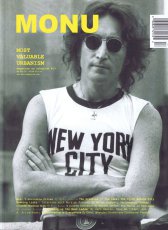
When John Lennon was photographed by the legendary rock 'n' roll photographer Bob Gruen, wearing a New York City T-shirt in the year 1974, he proudly expressed his love for the city of New York. For Lennon, although born in Liverpool, New York City was without doubt the most valuable city. In that sense the value of a city can become extremely personal, subjective, and only a reflection of feelings, as Mika Savela argues in his contribution "Most T-shirtable Cities". Because of this subjective experience the value of a city is - just as the beauty of a city - in the eye of the beholder and what constitutes 'most valuable', in whatever respect, shifts back into our hands, as Bobby Shen puts it in his piece "Within a Day". People attribute a value to spaces that cannot be quantified in statistical terms, but is dependent on how 'city users' identify with the place where they live, as Luciano Alfaya and Patricia Muñiz explain in their article "Urban Perception of Happiness". And this identification is usually based on rather intangible criteria; social, cultural, and psychological dimensions; or qualities such as history, identity, memories, or lifestyle, as Human Wu illustrates in his piece "Tales of Nail Houses". Nevertheless, it would be naïve to exclude certain basic physiological needs out of the value discussion regarding cities. Those basic needs include, for example, security, housing, or health as Ruraigh Purcell, who spent several years running an analytical team producing city ranking lists, points out in an interview with us entitled "The Crumbles of the Cake - The Truth Behind City Ranking Lists". In his opinion, basic, low-level needs have to be satisfied in a city, referring to Maslow's Hierarchy of Needs, before you are in a position to move to a higher level of needs that would take in account things such as educational and cultural stimulus. Most of the evaluation criteria used by companies such as Mercer or the Economist Intelligence Unit to produce the famous city ranking lists that define the so called "most liveable cities", are based mainly on those basic needs. But what is often less known is the fact that those ranking lists are not representative, as they use as a primary source the answers of a particular socio-economic group: expatriates. Klaas Kresse detects that fact in his text "The Systematic Thinking Livability Rankings Imply" and discloses that rankings are not made for the multiplicity of urban dwellers, but for a group of wealthy, well-educated and highly skilled professionals. He furthermore points out that the livability rankings imply an urban thinking in terms of closed systems as cities start focusing on the points already scored, which makes them static and inflexible. To continue being able to change Matthew Johnson proposes in his piece "Is Livability Overrated?" that cities should be allowed to exist in a state of perpetual upgrading and renovation - always under scaffolding, in the form of a transactional urbanism. In his eyes, Houston in Texas is such a transactional city that is evolutionary and voracious, and secure in itself, despite its imperfections. Jürgen Krusche misses such imperfections in the always top-ranked city of Zurich as he clarifies in his contribution "The Value of Ugliness", where the constant striving toward clean, safe, and beautiful public spaces has banished unwelcome individuals from marginalized social groups from public life. But ever since the Economist began some ten years ago to rate cities such as Vancouver as the number one most livable city in the world, while other livability indices by Mercer and Monocle Magazine also gave it consistently high rankings, the safe and clean downtown living model of Vancouver became the planning model for cities around the world, as Brendan Cormier and Christopher Pandolfi explain in their article "Vancouverism is Everywhere". Today, top positions in urban planning councils all over the world are filled with Vancouverities. However, there seems to be a resistance towards Vancouverism and there are possibilities to top livability ranking lists without following the trends, as Stefan Gruber explains in his text "Vienna: Slow Capital?", in which he suggests that the quality of life in a city might also be determined by its capacity to resist certain movements and instead to concentrate on its unique attributes.
Text von der Webseite
|
Titel
-
MONU magazine on urbanism #12
Technische
Angaben
-
144 S., 27x20 cm, ISBN/ISSN 1860-3211
Broschur, verschiedene Papiere.
ZusatzInfos
-
Luxury Space By Jason Lee; The World According to Mr. Reds By Doreen Jakob; The Shelter Category By Mammoth (Stephen Becker and Rob Holmes); How the City of Broad Shoulders Bought its Growth Spurt By Karl Johann Hakken; Residential Developers and Investors in Central Europe: Boom and Bust By Maximilian Mendel; Pyongyang in a New Era By Yim Dongwoo; Casino City State By Rustam Mehta and Thomas Moran; Solidere, Inc., or Downtown Beirut By Carol Moukheiber; Real High - The Desire for the Real in Urban Real Estate By McLain Clutter; Real Creativity: A Case for Ethical Freedom in Architecture By Randall Teal; Life without Architects - Interview with Magriet Smit By Bernd Upmeyer; The New York Value Exchange By Joyce Hwang; Real Big - Interview with Bjarke Ingels By Beatriz Ramo; Magic Realism - A New Skyline for Rome By Simone De Iacobis; Business Park De Hoef Revisited 1998-2008 By Arjan Harbers (Topotronic); Brand New Landlords By Daan Roggeveen and Michiel Hulshof; Market Value(s) By STAR; Living on the Edge By Bas Princen; Why should a Developer read Aristotle By Marta Relats; Unbuilt Rotterdam By ZUS [Zones Urbaines Sensibles]; Rotterdam is a Whore - Interview with Andre Kempe By Beatriz Ramo and Bernd Upmeyer; To Build or not to Build By MVRDV
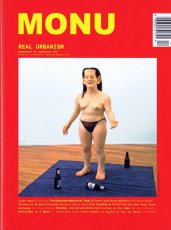
Just like the "Ideal Woman" on the cover of this issue on Real Urbanism - a sculpture by the Brooklyn based artist Tony Matelli - most of our cities are shaped by a particular set of values that does not necessarily lead to high quality urban spaces, but instead to scary, ethically unacceptable and distorted forms. As the "Ideal Woman", so "Ideal Cities" can easily end up only fulfilling the wishes and dreams of a powerful minority, but neglect the needs of most of the other people. Jason Lee, one of the contributors to this issue, that deals more with "Real Estate" Urbanism rather than with Actual or Factual Urbanism, uses this sculpture in his article "Luxury Space" to display the consequences that can occur when a financially powerful elite develops real estate projects in the city of Shanghai merely to accommodate their consumerist desires. Cities have been reduced to machines for making and spending money as Stephen Becker and Rob Holmes put it in their piece "The Shelter Category". Especially in Central European countries, where two decades ago the state-controlled economy changed into a market-economy, developers are driven by pure profit rather than by a genuine desire or even awareness of sustainable neighbourhoods and city development as Maximilian Mendel describes in his text "Residential Developers and Investors in Central Europe: Boom and Bust". But blaming only the financial elites and the real estate industry for the prevailing urbanism of mediocrity would be too easy. For successful urban planning, cities depend on private financing as Carol Moukheiber points out in her contribution "Solidere, Inc., or Downtown Beirut", where a productive collaboration between a corporate and a cooperative party led - although heavily criticised and carried out in a kind of pseudo democratic Berlusconian way - to prosperous results. In the case of Rotterdam, where the municipality actually cares very little about the city, real estate developers seem to be even more concerned about the quality of urban spaces than the city itself, as stated by Andre Kempe in an interview with us entitled "Rotterdam is a Whore". To halt the process by which the built-up form of our cities continues to be mainly driven by practical concerns such as efficiency, profit, and self-promotion, Randall Teal proposes in his piece "Real Creativity: A Case for Ethical Freedom in Architecture" that architects should become developers themselves. But how many architects would be able and interested in doing that? Magriet Smit, a Rotterdam based real estate developer, explains in the interview "Life without Architects" that she actually tries more and more to avoid working with planners and rather collaborates directly with construction companies as they share a greater understanding of their profession. But to prevent our cities from turning into monstrous "Ideal Cities", as perverted as the "Ideal Woman", all the parties involved that are shaping the cities - the developers, the municipalities and the planners - have to accept their interdependencies, and have to try to understand the different interests of each party and have to dare to navigate into unknown territory as Bjarke Ingels concludes in an interview with us entitled "Real Big".
Text von der Webseite
|
Titel
-
MONU magazine on urbanism #14
Technische
Angaben
-
128 S., 27x20 cm, keine weiteren Angaben vorhanden
Broschur
ZusatzInfos
-
The Naked Lunch: A Stark Honest Discussion On Renewal by UNION3; On Politics of Planning by Henk Ovink; Beyond Editing by Simone Pizzagalli; Extreme Demolition and Extreme Preservation by OMA; Apoptotic Woomera 2035 by Lucas Dean; Eternal Ise by Jarrik Ouburg; Moveable Chair by Sara Hendren; What not to Do: A Case for Designed Neglect by Sean Burkholder; Deadly Serious - Interview with Adolfo Natalini by Beatriz Ramo and Bernd Upmeyer; In the Name of the Past by Beatriz Ramo - STAR strategies + architecture; Cultural Editors by Paul Meurs and Marinke Steenhuis; The Digital Habitat and Urban Design as Emerging Practice by Jan Bovelet and Miodrag Kuc; Between Material and Culture by Ephraim Joris; Controlling the City by Michiel van Iersel, Juha van 't Zelfde, and Ben Cerveny; Layered Reality by Gijs Hoofs and Michiel Daalmans; Urban Field Manuals by Brian Davis, Rob Holmes, and Brett Milligan; This Is Not an Empty Plot by Patrizia Di Monte; The Good, the Bad and the Ugly - Excerpts from MONU's Most Valuable Urbanism Debate.
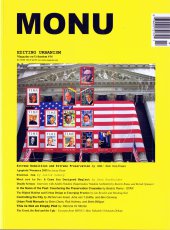
Despite the current urgency to deal with the enormous potential of the already existing urban material as Urban Editors, there seems still to be an enormous lack of interest in topics such as urban and architectural restoration, preservation, renovation, redevelopment, renewal or adaptive reuse of old structures among architects and urban designers. But ignorance in this matter can only be dismissed as socially irresponsible and economically and culturally unacceptable. But what might be the reason for the prevailing ignorance? Who is to blame? Why is Urban Editing considered to be so utterly unattractive? Felix Madrazo, one of the members of the UNION3 collective, blames the media and in particular architecture publications, as he points out in UNION3's discussion of urban renewal entitled "The Naked Lunch: A Stark Honest Discussion on Renewal". He states that a prestigious architectural magazine such as the Spanish El Croquis would never publish an architect who has been practicing renewal for the last twenty years. In OMA's contribution "Extreme Demolition and Extreme Preservation" Rem Koolhaas holds the arrogance of the modernists responsible for making the preservationist of today look like a futile and irrelevant figure. He furthermore claims that preservation necessitates the development of a theory of its opposite: not what to keep, but what to give up, what to erase and what to abandon - and proposes a system of phased demolition. To a certain extent this is what Lucas Dean recommends in his piece "Apoptotic Woomera 2035" for a small town in South Australia, in which he suggests a programmed urban death that ensures that the urban fabric can constantly undergo a process of rejuvenation. The concept is an analogy to the biochemical process of apoptosis, which is organized cell death that our bodies undergo on a daily basis, killing fifty to seventy million cells, enabling the body to rejuvenate and ensure longevity. Obviously terms such as death and rejuvenation are crucial notions when it comes to Editing Urbanism. In his article "Eternal Ise" Jarrik Ouburg sees destruction as a natural part of preservation. He advises to look east and learn from the way how in Japan important shrines have been rebuild every twenty years for more than ten centuries. But accepting death and decay in buildings is one thing, when it comes to our own death, things get much more complicated. For that reason Adolfo Natalini, one of the founders of the legendary 60ies architecture firm Superstudio, does not like physical changes in cities, because they remind us that we are moving closer and closer towards death, as he explains in an interview with us entitled "Deadly Serious". He likes to be surrounded by things that remain the same as they give us the impression of eternity and he sees architecture as the most powerful medium of this form of hope. To solve the paradoxical situation that cities should on the one hand remain the same, keeping and maintaining all their existing buildings, yet on the other able to change, Beatriz Ramo / STAR suggests in "In the Name of the Past: Countering the Preservation Crusades" to establish Virtual World Heritage Sites as a new category for UNESCO. Virtual preservation enables cities to survive for eternity in the virtual, yet remain living and changing organisms in the real world. Released from the fear of death, Editing Urbanism can become a vital, active and experimental practice, in which the concept of sample and the remix gain importance as a cultural technique as Jan Bovelet and Miodrag Kuc describe in their contribution "The Digital Habitat and Urban Design as Emerging Practice". Just as remixes of songs are alternative versions of recorded songs, made from original versions, remixes of cities can be alternative versions of the original cities. Especially with the help of hand-held devices, mobile and digital online applications, citizens will be able to alternate and control cities as Michiel van Iersel, Juha van't Zelfde, and Ben Cerveny explain in their article "Controlling the City". To edit cities successfully, Brian Davis, Rob Holmes, and Brett Milligan even propose to develop "Urban Field Manuals", which show how to change or maintain your city just as automotive maintenance manuals teach you how to repair or maintain your car. Such Urban Field Manuals allow you for example to learn how, as a non-profit landlord, to approach buildings that are awaiting demolition permissions for a new construction on old properties, and to format micro-contracts that make unoccupied buildings available to other non-profits at the costs of utilities alone. But one of the most successful strategies for such reuse of unoccupied spaces in cities has probably been developed by Patrizia Di Monte recently. In her contribution "This Is Not an Empty Plot", she shows how she created an employment plan, in which sixty one long-term unemployed workers cleaned initially empty plots of the historic district of Zaragoza, which led eventually to the realization of twenty-eight projects on those lots over the last two years.
Text von der Webseite
|
Titel
-
MONU magazine on urbanism #11
Technische
Angaben
-
130 S., 27x20 cm, ISBN/ISSN 1860-3211
Broschur
ZusatzInfos
-
Sci-fi Greenery ...or just Responsibility? By Samo Pedersen; Clean Cities - Dirty People By Matteo Muggianu; Dirty Consumerism By Nikonus Pappas; Coming Clean By Randall Teal ; Domes over Manhattan - Interview with Gerd Hauser By Bernd Upmeyer; Rendering the Clean By Nathalie Frankowski and Cruz Garcia (WAI); The Mobile Library Unit By John Southern; Where the Grass Is Greener By Tomorrow’sThoughtsToday; Clean around the Edges By Lee Altman; Bio - Port By Greg Keeffe and Simon Swietochowski; Zeekracht - The North Sea Masterplan By OMA; Scarcity: Bipolar Urbanism in the Sonoran Desert By Felipe Correa; Regenerative Ecologies By Claudio Astudillo Barra; Clean Energy is Dirty Business By Aleksander Tokarz; Dystopic Verdure By Jacob Ross Boswell; How to Win Poetic Praise and Influence Architects By Amanda Webb; The Cooperative City By Rogier van den Berg; Mania By Bryan Norwood and the Jackson Community Design Center
Do we simply have to stop having sex to produce Clean Urbanism - i.e. an urbanism that is dedicated to minimizing both the required inputs of energy, water, and food for a city as well as its waste output of heat, air pollution as CO2, methan, and water pollution, Samo Pedersen asks in his piece “Sci-fi greenery..or just Responsibility?”. In fact Randall Teal sees the growing world population frequently ignored in discussions on sustainability, as he points out in his article “Coming Clean: Owning Up to the Real Demands of a Sustainable Existence”. Fewer people spend less energy, and as the gas and oil supply will come to an end sooner or later, saving energy may be a cheaper and smarter solution for cities than depending on renewable energies, as Gerd Hauser, one of the leading researchers on the implementation of the EU Directive on Energy Performance of Buildings, explains in an interview with us, entitled “Domes over Manhatten”. Although sustainability has recently become a cache misère for our lack of intent, a trendy make-up hiding our incompetence, with Clean Urbanism being its apotheosis as Nathalie Frankowski and Cruz Garcia (WAI) maintain in their contribution “Rendering the Clean”, energy self-sufficient cities are technically possible as Gerd Hauser states and explains using a five-point manifesto. Greg Keeffe and Simon Swietochowski support that view by introducing their “Bio-Port” project, a vision of a “Free Energy City” set in Liverpool, where the old dockyards have been transformed into bio-productive algae farms. Furthermore, the Office of Metropolitan Architecture (OMA) illustrates in its project “Zeekracht – The North Sea Masterplan” how wind farms could be clustered along an Energy Super-Ring in the North Sea, distributing national surpluses and supplying regional energy needs efficiently and profitably. On the other hand, Clean Urbanism cannot only be understood from a purely technocratic perspective, but also needs a social one as Claudio Astudillo Barra articulates in his article “Regenerative Ecologies – A Prototypical Approach to the Territory”, introducing Felix Guattari’s ideas of ecosophy. On such social aspects Rogier van den Berg focuses in his piece on “The Cooperative City”, where a community is created that triggers individual initiative and the cooperation of its users to generate collective values. The Cooperative City requires a flexible plan with an open end that is only guided by one set of rules, described by Bryan Norwood and the Jackson Community Center as “Mania: An Emergent Sustainability of Density and Intensity”, created by the disorganized, hyperactivity of an actualized system with no specified, singular goal, a bottom-up phenomenon that emerges from the individual events of architecture within the city, combined with the ideology of urbanism conceived as anti-capitalism and anti-homogenization. It is mania, and mania is clean.
Text von der Webseite
|